for the scenario of accessing korean servers on alibaba cloud, the best solution is usually to combine alibaba cloud 's global accelerator , multi-region deployment and cdn , to obtain the lowest end-to-end delay; the cheapest solution prefers to reduce cross-region requests through dns policy, local caching, http/2/quic and front-end optimization, thereby improving the experience at a very low cost; while the most cost-effective compromise solution is to use cdn plus cen or dedicated line on-demand connection, combined with application layer caching and asynchronous design, which can both reduce latency and control bandwidth costs.
cross-region access delays come from physical distance, network hops and routing efficiency, bandwidth and packet loss, dns resolution time, tls handshake, application layer blocking (synchronous cross-region requests), etc. understanding these causes is a prerequisite for selecting optimization methods. for example, packet loss will cause tcp retransmissions to significantly increase rtt, and tls not enabled will increase the connection establishment time.
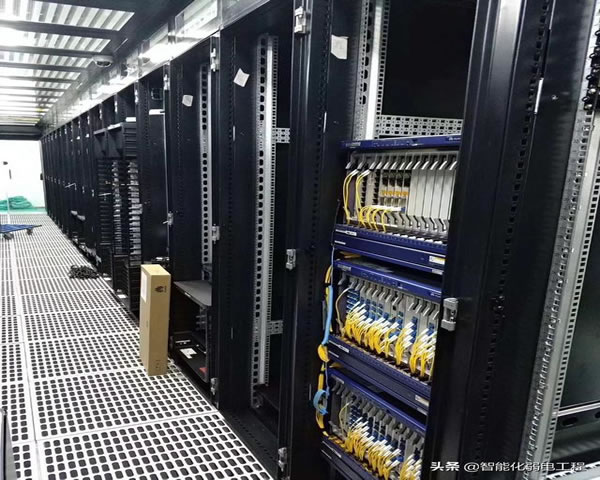
it is recommended to use ping/traceroute/mtr to locate network paths and packet loss; use iperf3 to measure bandwidth and jitter; use curl -w or browser developer tools to analyze dns, tcp, tls, and ttfb; and combine alibaba cloud cloudmonitor, log service, and slb statistics to confirm request distribution and hotspots. record baseline data and then optimize each item to facilitate quantification of benefits.
at the network level, global accelerator is the first to be introduced. it directs user traffic to the nearest acceleration node and then through the alibaba cloud backbone to the target region, which can significantly reduce cross-border jitter and packet loss. for enterprise-level interconnection, use express connect or cloud enterprise network (cen) for dedicated lines or inter-cloud interconnection to ensure bandwidth and stability. if the budget is limited, you can first improve routing by optimizing bgp, peering with local isps, or using anycast dns.
deploying a cdn can sink static resources and some dynamic caches to south korea/surrounding nodes, significantly reducing user request rtt. with reasonable cache-control, versioned static resources and oss as the origin site, the number of cross-region origin returns can be reduced. using alibaba cloud's dns (alibaba cloud analysis) for geographical scheduling and combining it with gslb policy offloading can also improve the hit rate.
enabling http/2 or quic can reduce the number of connections and multiplexing. tls uses session reuse/ticket (session resumption) to shorten the handshake time; enabling tcp optimization (such as window scaling, bbr congestion control) on the server side and adjusting the mtu to avoid fragmentation can reduce transport layer latency.
try to avoid cross-region synchronous calls for every request, and use asynchronous tasks, message queues, read-write separation and local read cache (redis) to reduce cross-region blocking. for database access, consider deploying read-only replicas in south korea or using data synchronization services to put hot data closer to users and reduce cross-region round-trips from the application layer.
best: global accelerator + multi-active or nearby deployment + cdn + cen, high cost but lowest delay, suitable for delay-sensitive businesses. the cheapest: front-end optimization, cdn free tier/pay-as-you-go, dns strategy, http compression and image optimization, small investment but limited effect. compromise: cdn + cen on-demand access + local cache and read-only copy, the cost is moderate and the effect is stable.
1) measure the baseline and identify critical paths; 2) deploy cdn and cache static resources, and set reasonable ttl; 3) try global accelerator or cen trial operation and compare rtt; 4) enable http/2/quic and tls session reuse on the server; 5) optimize the application architecture (caching, asynchronous, read replica); 6) monitor and set alarms, and iterate step by step.
monitoring should cover the network layer (packet loss, delay, bandwidth), application layer (ttfb, error rate) and cdn hit rate. common problems include: dns caching causing traffic not to be scheduled as expected, origin site bandwidth limitations causing slow return to the origin, dedicated line configuration errors or acl rate limiting. use traceroute/mtr and real user monitoring (rum) regression verification after each optimization.
if the budget is sufficient and the real-time requirements are high, the preferred combination is: deploy application or database copies nearby in south korea, cooperate with global accelerator and cdn , and use cen or express connect to ensure inter-cloud links; if the budget is limited, priority is given to cdn + application layer caching + protocol/front-end optimization, and network products will be added later depending on business growth.
reducing the cross-region delay from alibaba cloud to korean servers requires parallel optimization at three layers: network, transmission, and application: the short-term effective solution is cdn and protocol optimization, and the long-term and best-effective solution is to combine global accelerator , multi-region deployment, and cen/dedicated lines. through systematic measurement and gradual implementation according to priority, the user experience can be significantly improved while controlling costs.
- Latest articles
- Are Taiwanese Servers Easy To Maintain And Maintain? An Overview Of Security Risks And Countermeasures
- Based On Korean Servers, We Provide Nationwide Security And Compliance Issues And Response Suggestions.
- How Does The Technical Team Reasonably Schedule Vietnam's Native Proxy Ip Nodes In The Crawling Task?
- Analysis Of The Actual Value Of Singapore Host Cn2 Hosting Solution For Website Acceleration Of Foreign Trade Companies
- How To Make Good Use Of The Japanese Amazon Qq Group To Increase Store Traffic And Conversion Rate
- Enterprise Network Upgrade Guide Vietnam Cn2 Line Improves User Access Speed
- Practical Tips On Cost Control And Performance Balance In Vps Deployment In China, South Korea And Japan
- How To Achieve Stable Access To E-commerce And Saas Applications Through Cn2 Us Dedicated Servers
- Key Considerations Regarding Qualifications And Technical Support When Selecting A Service Provider For The CN2 Server Cluster In South Korea
- Recommended Singapore IPLC Dedicated Servers For Security And Compliance – Case Studies On Data Encryption And Dedicated Channel Deployment
- Popular tags
-

Recommended Discounted Korean VPS For Your Live Streaming Needs
Discover discounted Korean VPS recommendations to meet your live streaming needs, offering high-performance server options to help you easily set up a live streaming platform. -
Cloud Server Korea Stability And Security Assessment Guide
this article will explore the stability and security of cloud servers in south korea in depth and help users choose the right service. -

Detailed Comparative Analysis Of Which Computer Room Is More Reliable When Choosing Korean Vps
this article analyzes in detail the reliability of choosing a korean vps computer room, and provides a practical step-by-step guide to help users make a wise choice.